This is the official blog of MCS - the Media and Cinema Studies Program in the College of Communication at DePaul University (Chicago, IL). Here you will find the latest updates from our faculty members about new research and publications, conference talks, sponsored events and more.You'll also find updates from current students and alumni (including career paths, publications and media events).

Wednesday, 1 May 2019

DePaul hosts the Fan Studies Network North America 2019 Conference

The Media and Cinema Studies Program and the College of Communication will host the 2nd annual Fan Studies Network North America conference from October 24-26 2019 at the Loop campus. This conference will bring together scholars from around the world to present papers and participate in workshops on a wide range of fan-related subjects.

           FSNNA Banner

DePaul hosted the inaugural conference in 2018, in which several MCS faculty members presented their research: Prof. Sam Close was a roundtable participant on fan studies and pedagogy; Prof. Paul Booth discussed fandom and the 2016 U.S. election; Prof. Blair presented on comics fandom and the 1940s comic book series entitled "All-Negro Comics."

For more information: https://fsn-northamerica.org/

New book by Prof. Paul Booth

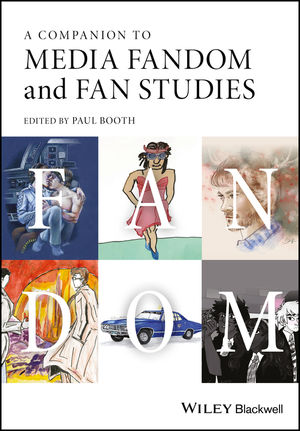
Prof. Paul Booth's new book, A Companion to Media Fandom and Fan Studies has recently been published by Wiley-Blackwell.


Divided into five section - Histories, Genealogies, Methodologies; Fan Practices; Fandom and Cultural Studies; Digital Fandom; and The Future of Fan Studies - this book features over thirty essays from a range of international scholars on the past, present and future of the field of fan studies.

For more details, see Wiley-Blackwell: https://www.wiley.com/en-us/A+Companion+to+Media+Fandom+and+Fan+Studies-p-9781119237167

Monday, 1 April 2019

MCS hosts the Pop Culture Conference - A Celebration of Disney

Join us on Saturday May 4th for the 7th annual Pop Culture Conference - A Celebration of Disney. This event will feature numerous panels on all aspects of Disney fandom, plus keynote talks by Disney animator Philo Barnhart and Professor Rebecca Williams.

            Flyer1.jpg

For more info, see our website at: https://popcultureconference.com/

Tuesday, 18 September 2018

Prof. Booth Interviewed by The Chicago Tribune

Prof. Paul Booth was interviewed for a September 17th, 2018 article in The Chicago Tribune. The article, ""Fake website displaying obscene content taken down by Buffalo Grove-Lincolnshire Chamber of Commerce," looks at issues of social media hacking and pranking. Booth describes how while "social media sites being hacked into or mirrored by pranksters is not uncommon, it is odd for an off-shore entity to target a small nonprofit in the United States."


Read the full article here:
http://www.chicagotribune.com/suburbs/buffalo-grove/news/ct-bgc-buffalo-grove-chamber-fake-website-tl-0920-story.html

Public Lecture: "Cinema and the City" - Celestino Deleyto

Please join the Media and Cinema Studies Program on Wednesday Oct 24th, 2018 for 'Cinema and the City,' a public lecture by Prof. Celestino Deleyto of the University of Zaragosa, Spain. Prof. Deleyto is the author of the recent book From Tinseltown to Bordertown: Los Angeles on Film, and his talk will focus on the role played by Los Angeles within David Lynch's film Mulholland Drive.


The event starts at 6:30 pm, Wed. Oct 24th in room LL102 in the Daley Building at DePaul University, 237 State Street. Please take the elevators down to the lower level. A Q&A session will follow.

Wednesday, 8 August 2018

Prof. Davis Interviewed for The Chicago Tribune about Beyonce

Prof. Blair Davis was interviewed by The Chicago Tribune for an August 3rd, 2018 story about Beyonces' editorial role for an upcoming issue of Vogue Magazine. The article, "Beyonce the gatekeeper? How African-American representation in media has evolved," asks about the cultural stakes involved in Beyonce's work for Vogue, as well as the historical legacy of how African American identity has been represented in the media. Davis draws parallels with the Peanuts comics strip, 1970s television programs like Sanford and Son and Fat Albert & the Cosby Kids as well as the recent Black Panther film.


The full article can be read here:
http://www.chicagotribune.com/lifestyles/sc-fam-blacks-media-beyonce-vogue-0807-story.html

Tuesday, 1 May 2018

Blair Davis on AMC's James Cameron's Story of Science Fiction


Prof. Blair Davis appeared on the premiere episode of James Cameron's Story of Science Fiction on AMC, which first airfd Monday April 30th. In the episode he discusses such 1950s Sci-Fi films as War of the Worlds and Invasion of the Body Snatchers.

Image courtesy of AMC


Bringing up ideas covered in his book The Battle for the Bs: 1950s Hollywood and the Rebirth of Low-Budget Cinema, Davis contextualizes how the 1953 War of the Worlds film compares to Orson Welles' 1938 radio broadcast and compares the differences in how that film approaches the very idea of alien invasion to Invasion of the Body Snatchers.

Image courtesy of AMC


Davis will be offering a new course about Science Fiction cinema at DePaul in early 2019.

Wednesday, 7 March 2018

Prof. Davis Television Interviews

As part of a series of interviews about the release of Black Panther, Blair Davis had two recent appearances on television:


ABC-7, “CPS Students, Families, Churches Pack ‘Black Panther’ Showings”
http://abc7chicago.com/entertainment/cps-students-families-churches-pack-black-panther-showings/3107535/http://abc7chicago.com/entertainment/cps-students-families-churches-pack-black-panther-showings/3107535/


Image result for abc-7 chicago logo


Voice of America, “Black Panther Sets Hollywood Records as Crowds Pack Theaters Around the Globe”


Image result for voice of america logo


Sunday, 25 February 2018

Chicago Film Seminar at DePaul University, Thurs. March 1, 7:30 pm

The Media and Cinema Studies Program is proud to host the Chicago Film Seminar at DePaul University.

The Chicago Film Seminar (CFS) is a consortium of scholars from area universities offering advanced degree programs in media and cultural studies, including DePaul University, Northwestern University, the School of the Art Institute of Chicago, Columbia College, University of Chicago, and University of Notre Dame.  CFS organizes presentations by faculty and graduate students, and each presentation is followed by a lively discussion. 

The next meeting of the seminar features presentations by the two co-winners of the Society for Cinema and Media Studies First Book Award for 2016-2017, Prof. Miriam Petty of Northwestern University and Prof. Allison McCracken of DePaul University's American Studies Program.  The meeting will take place on Thursday, March 1, at 7:30 PM in DePaul's Daley Building at 14 E. Jackson Blvd., Room LL 102.  Prof. Allyson Nadia of the University of Chicago will moderate.

Miriam Petty's book Stealing the Show is a study of African American actors in Hollywood during the 1930s, a decade that saw the consolidation of stardom as a potent cultural and industrial force. Petty focuses on five performers whose Hollywood film careers flourished during this period—Louise Beavers, Fredi Washington, Lincoln “Stepin Fetchit” Perry, Bill “Bojangles” Robinson, and Hattie McDaniel—to reveal the “problematic stardom” and the enduring, interdependent patterns of performance and spectatorship for performers and audiences of color. She maps how these actors—though regularly cast in stereotyped and marginalized roles—employed various strategies of cinematic and extracinematic performance to negotiate their complex positions in Hollywood and to ultimately “steal the show.” Drawing on a variety of source materials, Petty explores these stars’ reception among Black audiences and theorizes African American viewership in the early twentieth century. Her book is an important and welcome contribution to the literature on the movies.

The crooner Rudy VallĂ©e's soft, intimate, and sensual vocal delivery simultaneously captivated millions of adoring fans and drew harsh criticism from those threatened by his sensitive masculinity. Although VallĂ©e and other crooners reflected the gender fluidity of late-1920s popular culture, their challenge to the Depression era's more conservative masculine norms led cultural authorities to stigmatize them as gender and sexual deviants. In Real Men Don't Sing Allison McCracken outlines crooning's history from its origins in minstrelsy through its development as the microphone sound most associated with white recording artists, band singers, and radio stars. She charts early crooners’ rise and fall between 1925 and 1934, contrasting Rudy VallĂ©e with Bing Crosby to demonstrate how attempts to contain crooners created and dictated standards of white masculinity for male singers. Unlike VallĂ©e, Crosby survived the crooner backlash by adapting his voice and persona to adhere to white middle-class masculine norms. The effects of these norms are felt to this day, as critics continue to question the masculinity of youthful, romantic white male singers. Crooners, McCracken shows, not only were the first pop stars: their short-lived yet massive popularity fundamentally changed American culture.


Miriam J. Petty is Associate Professor in the Department of Radio/Television/Film at Northwestern University. Her first book, Stealing the Show: African American Performers and Audiences in 1930s Hollywood (University of California Press), was the co-winner of the Society for Cinema and Media Studies Best First Book Award for 2016-2017. Petty’s other honors include a 2015-2016 Alice Kaplan Institute Faculty Fellowship and a 2014-2015 Junior Faculty Fellowship with the Woodrow Wilson Foundation. An academic with a longstanding commitment to public scholarship, Petty is also an avid producer of public programs; her recent projects include the 2012 symposium "Madea’s Big Scholarly Roundtable: Perspectives on the Media of Tyler Perry" at Northwestern University, and the 2015-2016 film series "Seeds of Disunion: Classics of African American Stereotypy" at the Black Cinema House of Chicago. She is currently at work on a book manuscript examining media mogul Tyler Perry’s productions and his African American audiences’ nostalgic investments in such cultural forms as folktales, music, literature, and religious practice.

Allison McCracken is Associate Professor of American Studies at DePaul University. She is the author of the book Real Men Don't Sing:  Crooning in American  Culture  (Duke University Press, 2015), which has received several awards, including co-winner of the Best First Book Award from the Society for Cinema and Media Studies, the Irving Lowens Book Award from the Society for American Music, the Woody Guthrie Prize from the International Association for the Study of Popular Music-United States (IASPM-US), and the Philip Brett Award from the American Musicological Society's LGBT Study Group. She teaches courses in American popular culture and media, social media, gender and sexuality studies, and American Studies methods.  She is currently doing research on the television series The Voice and the social media platform Tumblr.

Allyson Nadia Field is Associate Professor of Cinema and Media Studies at The University of Chicago. A scholar of African American cinema from the silent era to the contemporary, her work combines archival research with concerns of film form, media theory, and broader cultural questions of representation. She is the author of Uplift Cinema: The Emergence of African American Film & the Possibility of Black Modernity (Duke University Press, 2015) and co-editor with Jan-Christopher Horak and Jacqueline Stewart of L.A. Rebellion: Creating a New Black Cinema (University of California Press, 2015). She also served as a co-curator of the L.A. Rebellion Preservation Project of the UCLA Film & Television Archive. With Marsha Gordon, she is co-editing Screening Race in American Nontheatrical Film (Duke University Press, Forthcoming 2018). Her current book project is on African American film historiography, the challenge of evidence, and the “speculative archive.”  

Tuesday, 13 February 2018

Prof. Davis on Black Panther in The Chicago Tribune

Blair Davis was recently interviewed for The Chicago Tribune about the cultural importance of Marvel's Black Panther film.


“Black Panther has arrived not only at the right time as far as film franchises go … it’s also arrived at the right time culturally because of this moment we’re in, we’re having these larger discussions about diversity and about race,” he says. Read the full story here:

https://www.google.com/amp/www.chicagotribune.com/news/local/breaking/ct-ae-black-panther-cultural-impact-0211-story,amp.html


Davis will be part of a panel talk for Black History Month about the film on the night of its release, Friday February 16th, at Baker McKenzie in Chicago.


Tuesday, 6 February 2018

New MCS Courses - Spring 2018

The Media and Cinema Studies Program is offering several brand new courses this Spring 2018 quarter:

MCS 260
INTRODUCTION TO TRANSMEDIA STORYTELLING
Tuesday/Thursday 1:30 - 3, Loop Campus / Hybrid Course
Faculty: Paul Booth

Transmedia storytelling, or the distribution of narrative content across multiple technologies and media, is rapidly becoming a common trend in contemporary media making. Whether it’s television series sharing content with video games, films’ narratives continued (or begun) in graphic novels, or media systems in which no one medium takes precedence in telling the story, transmediation can take many forms. This class will introduce the concept of transmedia from a media studies viewpoint, will examine transmedia's history, contemporary usage, and creation, and will have students work together to construct a transmediated narrative. Transmedia storytelling is an art form in the 21st century, but in this class we will also explore historical parallels, including very old forms of art and storytelling.


MCS 349 (crosslisted with DC 370 & MCS 521)
TOPICS IN FILM STUDIES: BRAND RECOGNITION: AUTHORSHIP IN CINEMA
Monday 5:45 – 9:00, Loop Campus
Faculty: Jason Sperb

Auteur Theory represents one of the longest running debates in film studies. With the large numbers of people involved in making a movie, should one person really be credited as the “author” of the film? Traditionally, the director has been deemed the auteur, but cases have also been made for the screenwriter, the producer, and even the studio system itself. Is authorship a question of how much control a particular individual has over the actual making a movie, or is it better thought of as a way critically to group specific films which share demonstrable thematic, stylistic, and narrative patterns? While the auteur theory originally gained prominence in postwar France as a way to both analyze and validate popular American movies, the idea has increasingly gained traction in Hollywood itself, where powerful individuals have a great deal of power over which films they make and how they make them. And increasingly, authorship has become another form of branding which allows studios to sell movies to the public. This course will provide an overview of some of the major debates over the years regarding whether one person should, or should not, be considered the author of a movie. It will also be a historical survey of some of the major filmmakers past and present—everyone from Alfred Hitchcock to Christopher Nolan, from Billy Wilder to Kathryn Bigelow, from Spike Lee to Paul Thomas Anderson. The grade will be based on short writing assignments, a research essay, discussion leader roles, and participation. The textbook will be Barry Keith Grant’s anthology, Auteurs and Authorship.


MCS 350 (crosslist with LST 300)
TOPICS IN GLOBAL CINEMA: MEXICAN CINEMA FROM THE GOLDEN AGE TO 
GUILLERMO DEL TORO
Monday/Wednesday 11:20 – 12:50, Lincoln Park Campus
Faculty: Luisela Alvaray

Mexican cinema has historically been one of the most important in the Spanish-speaking world. While Hollywood created the musical, Mexican audiences were watching comedias rancheras. This course will be a historical and critical survey of Mexican cinema, from the internationally acclaimed films of the Golden Age, to the global success of filmmakers like Guillermo del Toro and Alejandro G. Iñárritu. We will study the industrial and aesthetic connections between Hollywood and the Mexican film industry, as much as how this national cinema has fared within the Latin American region.


MCS 351 (crosslisted with AMS 395)
TOPICS IN TELEVISION STUDIES: THE WHOLE WORLD WAS/IS WATCHING: ACTIVISM, POLITICS, AND MEDIA IN 1968 & 2018 
Monday/Wednesday 1:00 – 2:30, Lincoln Park Campus
Faculty: Alex Thimons

This class explores the complex relationships among the media, activism, electoral politics, and civic life, considering contemporary issues in the context of the tumultuous events of 1968. In the United States (to say nothing of other countries), 1968 was marked by unprecedented cultural upheaval, due to political assassinations, student movements, racial uprisings, the Tet Offensive and the domestic responses it provoked, and the events surrounding the Democratic National Convention. Television helped to shape these events, contributing to shifts in Americans’ understanding of their national identity, and becoming an essential tool in conflicts between competing ideologies. In 2018,  intergenerational conflicts, activist movements, and political polarization all reflect 1968's continued resonance. This class will view contemporary media culture through the lens of these important events of fifty years ago, tracing continuities from the past to the present, while exploring ways in which industrial and technological changes have altered the way individuals interact with the media, politicians, and civic institutions.


MCS 352 (crosslisted with ORG 357 & AMS 397)
TOPICS IN NEW MEDIA: ENTREPRENEURSHIP IN THE DIGITAL ECONOMY
Tuesday/Thursday 11:50 – 1:20, Loop Campus
Faculty: Samantha Close

In this course, students analyze the rise of entrepreneurship as a “dream job” in the digital economy. We begin by considering what work means, both practically and philosophically, and how it became so central to both American and digital culture. Students next explore the intersection of digital entrepreneurship with identity and socio-economic position, analyzing the lives and media portrayals of notable entrepreneurs, from Steve Jobs to Brownie Wise to Dr. Dre. Finally, we consider the politics and possibilities of digital platforms for entrepreneurship, such as Patreon, Kickstarter, eBay, and Etsy. Throughout the course, students will connect what they’re studying to their own lives by considering themselves as potential entrepreneurs, playing through simulations, and visiting various sites, organizations, and individuals connected to digital entrepreneurship in Chicago.


MCS 358
TOPICS IN COMICS STUDIES: COMICS AND CINEMA
Online
Faculty: Blair Davis

This course examines the history of how comic books and strips have been adapted to film, from early 1900s newspaper strips, through numerous serials and feature films from the 1930s and 40s, through the sporadic efforts of the 1960s ,70s and 80s, into the modern era of franchises and transmedia spin-offs which currently sees numerous adaptations per year. We will also examine how movies themselves were adapted into comics throughout the 20th century, and how movie stars became comic book heroes. Students will analyze the differences in how each medium constructs its imagery and consider whether specific adaptive strategies are beneficial and/or detrimental in bringing comics to the screen, and bringing movies to the comics page.


Wednesday, 6 December 2017

MCS Grad Program Alumni Update: Sundance Film Festival

David Stewart, an alumni of the Media and Cinema Studies Graduate Program, is part of the crew who worked on a new documentary about director Hal Ashby that has been accepted to the 2018 Sundance Film Festival.


  Hal, directed by Amy Scott, is a documentary about the Oscar-winning director Ashby and his celebrated films [ which include Harold and Maude (1971), The Last Detail (1973), Shampoo (1975), Coming Home (1978) and Being There (1979)]. It will will be screened at the Sundance Festival as part of the 'U.S. Documentary Competition.' Stewart worked as an Archival Research/Post-Production Assistant on the film, finding rare photos, audio excerpts, and raw film footage for the production.


The Sundance Film Festival runs from January 18-28, 2018. For more details:
 https://www.sundance.org/blogs/news/2018-sundance-film-festival--feature-films-announced


Sunday, 8 October 2017

Prof. Davis Wins Spirit of Inquiry Award

Congratulations to Prof. Blair Davis on being given DePaul University's Spirit of Inquiry award. The award recognizes "specific research, scholarly or creative achievements that exhibit commitment to that spirit of creative inquiry, which we endeavor to inspire in our students."


The award was given at DePaul's annual Convocation ceremony at the beginning of the Fall 2017 quarter.

Tuesday, 1 August 2017

Prof. Paul Booth in USA Today

Prof. Paul Booth was interviewed for a recent article on the resurgence of board games in USA Today:

“There is something very human about sitting around with other people for an extended period of time and all working together on something,” says Booth. “You could be competing or cooperating, but you’re all focused on the same thing.”

See the full article here: https://www.usatoday.com/story/life/2017/07/31/bored-digital-games-join-board-game-renaissance/476986001/


Sunday, 16 July 2017

New MCS Course, Fall 2018: Gender and Popular Culture


Please join our new MCS Faculty member, Prof. Samantha Close, for her MCS 353: Gender and Popular Culture class this Fall!

-----------------------------------------

MCS 353 TOPICS IN FILM STUDIES: GENDER AND POPULAR CULTURE

Fall 2018

Prof. Samantha Close

This course investigates the way gender is constructed, maintained, and challenged within popular media.  It embraces an intersectional pedagogical method, whereby the entanglements of gender with race, class, sexuality, ability, and national culture are continuously analyzed throughout the quarter.

The course is organized into three main blocks.  In the first block, Seeing Gender, students will learn foundational theories of gender and communication and use them to challenge their instinctive ideas about gender.  We will practice applying these theories to analyze media representations of gender and media industry structure around those representations.  In the second block, Making Gender, we will turn to focus on how people create their own gendered representations to maintain and challenge social norms.  Students will practice expressing their critiques of gender through both writing and producing media.  In the third block, Living Gender, each week will focus in on a particular area of contemporary society.  We will explore in detail how gender is both created and challenged in these social arenas.

Wednesday, 3 May 2017

New Publication from Prof. Davis: “Comics and Methodology”


Prof. Blair Davis has a new publication in the debut issue of iNKS: The Journal of the Comics Studies Society (Vol. 1, No. 1).


Entitled “Comics and Methodology,” Davis moderates a roundtable discussion between Bart Beaty, Scott Bukatman, Henry Jenkins and Benjamin Woo. The discussion first took place at the 2016 Society for Cinema and Media Studies conference, and was edited and expanded for the first issue of iNKS. The panelists discuss the various methods involved in both teaching and researching comics as well as how interdisciplinarity is involved, the state of the field of comics studies and academic publishing therein, different audiences targeted by comics scholarship and more.

The roundtable can accessed via Project Muse (access required): https://muse.jhu.edu/article/651963/summary 

Tuesday, 28 March 2017

Dr. Kelli Marshall writes new article for the Chronicle of Higher Education

Dr. Kelli Marshall published a new article in the Chronicle of Higher Education today about her legal struggles trying to publish a new book about actor Gene Kelly.

                                   Related image

A regular contributor to the Chronicle, Marshall describes the effects of a looming lawsuit on her work:

https://chroniclevitae.com/news/1746-when-your-scholarship-goes-to-court?cid=at&utm_source=at&utm_medium=en&elqTrackId=cff0762bc78f43c1a811787a05d1e363&elq=f46f34c93a1349ae930ba64ee3046556&elqaid=13161&elqat=1&elqCampaignId=5448

Wednesday, 22 February 2017

Prof. Davis Edits Cinema Journal 'In Focus'

Cinema Journal Vol. 56, No. 2 features an 'In Focus' section devoted to Alan Moore and Dave Gibbons's Watchmen, edited by Prof. Blair Davis.


In Focus is a regular feature of Cinema Journal in which several short essays examine a case study from multiple perspectives. In addition to writing the introduction, Davis gathered together five scholars (Mark J.P. Wolf, Aaron Taylor, Drew Morton, Kathryn Frank and Dana Polan) to look at Watchmen's role within film, media and comics studies, exploring ideas about canonization, world-building, transmedia, adaptation, digital comics, authorship and academia.

The full section can be found here: http://www.cmstudies.org/?page=cj_in_focus


Monday, 6 February 2017

New MCS courses for Spring & Summer Quarters

The Media and Cinema Studies Program is offering three brand new courses between the Spring and Summer quarters:

MCS 331 TOPICS IN DOCUMENTARY STUDIES: IMPACT AND SOCIAL JUSTICE FILMMAKING
Faculty: Judith McCray
Spring Quarter 2017
Mondays/Wednesdays, 1:30-3:00pm, Loop Campus

This course explores the how, what and why of “Impact” media and “Social Justice” documentaries that are intended to inform, uplift or inspire social change.  Sourcing contemporary issues and change agents takes much more than having a good idea and preliminary vision.  This course will cover the nuts and bolts of what makes a compelling impact film—how to develop an idea into a concept; how to expand a concept into a story with a viable message; how to secure expert sources and supporting subjects; how to determine and manage the conflict that is inherent in a social issue and necessary for good storytelling; and how creativity and audio/visual elements enhance the storytelling and messaging.  Students will examine and critique Chicago-based and other long-form media, while developing a concept and structure for their own social justice film.


MCS 351 TOPICS IN TELEVISION STUDIES: “QUALITY” TV
Crosslisted with AMS 395
Faculty: Molly Schneider
Spring Quarter 2017
Tuesdays/Thursdays, 9:40-11:10am, Lincoln Park Campus

This course will be a survey of the concept of "quality" TV, exploring the ways the term "quality" has emerged and circulated at different periods in television history. The course will begin with early discourses of quality and progress through the political wave of the 1960s, the “quality” sitcoms of the 1970s and 1980s, police and legal dramas of the 1990s, the explosion of “quality” cable dramas in the late 1990s and 2000s, and, finally, the move to critically-acclaimed web-based series from Netflix and Amazon. We will address the notion of TV quality from industrial, cultural, and textual standpoints. What makes a program “quality” television, and who decides? How has the term changed and/or evolved? What textual and aesthetic strategies are associated with quality? What does it look like? What does it sound like? What are the commercial implications of quality? Who makes quality TV? Who watches quality TV, and who is depicted on quality TV? What are the limits of quality as a designation? Students in the course will address these critical questions as they explore quality as a important and complex topic in television studies.


MCS 353 TOPICS IN MEDIA STUDIES: HISTORY OF DISNEY
Crosslisted with MCS 522: TOPICS IN CINEMA/MEDIA STUDIES: HISTORY OF DISNEY
Faculty: Jason Sperb
Summer II, 2017  (July 17 – August 20)
Tuesdays/Thursdays, 5:45-9:00pm, Loop Campus

This course will focus on the many ups and downs over the decades of Disney’s slow aesthetic, economic, and cultural growth, providing a foundation for better understanding the company today. In addition to analyzing particular Disney texts (some well-known and many not well-known), special emphasis will be paid to the many facets of the studio’s first critical and commercial success in the 1930s, its struggles with bankruptcy throughout the 1940s, and its hugely successful re-branding as a prominent component of a new post-war leisure culture in the 1950s and 1960s. Extensive attention will also be paid to the company’s considerable revival and expansion under the “Team Disney” leadership of the 1980s and 1990s, as well as some reflection on the recent investment in once-competing brands such as Pixar, Marvel and Lucasfilm.

Friday, 13 January 2017

Public Talk by Prof. Davis

Prof. Blair Davis is giving a talk at the Morton Grove Public Library on Saturday January 21, 2017, 2 pm, on his new book Movie Comics. He will show and discuss clips from the 1940s film serials starring Superman, Captain Marvel, Batman and Captain America.

For more information:
http://mgpl.evanced.info/signup/eventdetails?eventid=2502&lib=0